| |
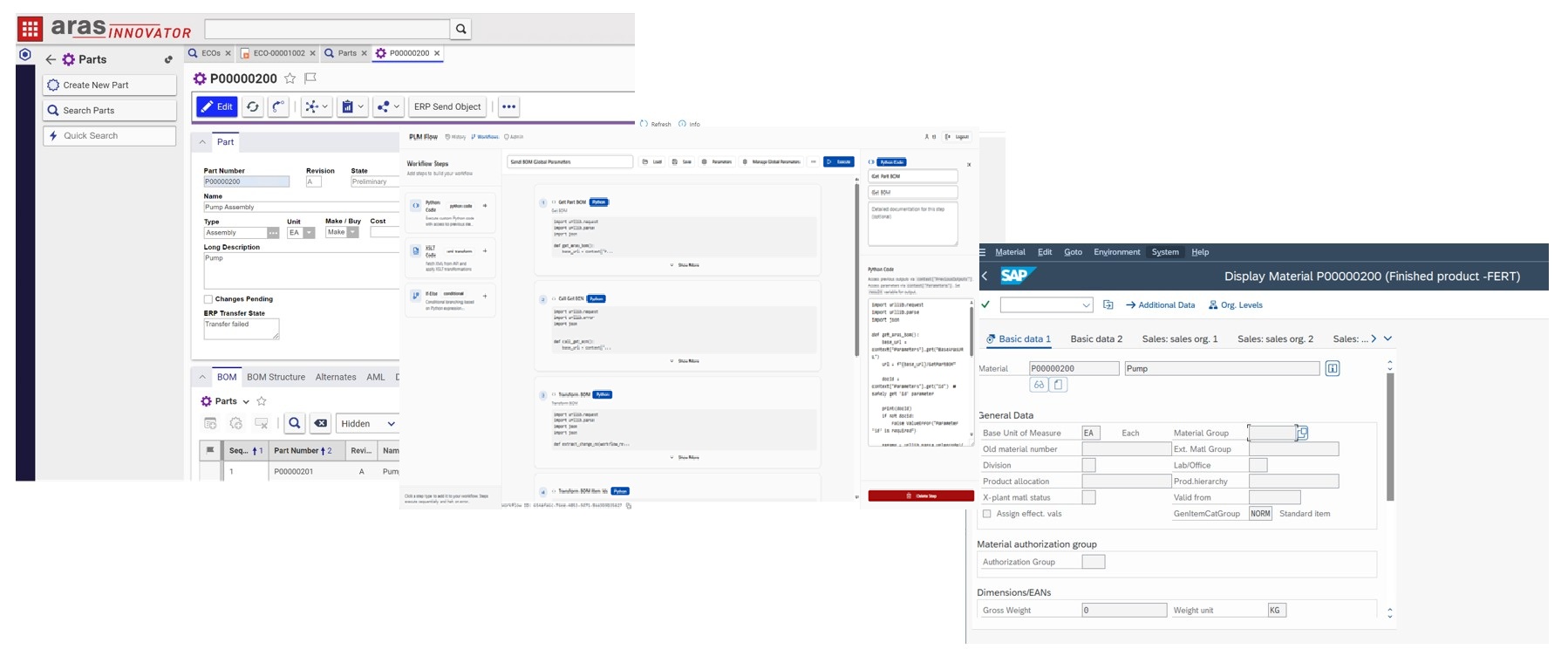
PLM Flow is focused specifically on the integration area between PLM and ERP systems — the objects and processes that are critical to manufacturing and engineering organizations:
- Materials — approval workflows and review & sign-off processes
- Bills of Materials (BOMs) — EBOM/MBOM, release management and controlled object publishing
- Documents — controlled publishing and lifecycle management across systems
- Change Management — end-to-end ECR / ECO lifecycle handling spanning PLM and ERP
- Custom objects and processes — tailored to the specific requirements of your organization
Architecture: Four Pillars of a Modern Integration Framework
- AI-First Design: Every component is structured to natively support AI tooling, making development, support, and future evolution significantly more efficient.
- Python-Based Process Execution: Integration processes are defined in Python — a widely adopted, auditable language with a rich AI and data ecosystem. This replaces opaque vendor-specific scripting with readable, maintainable logic
- XSLT-Based Data Transformation: Data mapping between PLM and ERP models is handled through XSLT transformations — structured, version-controlled, and fully traceable. Leveraging XSLT simplifies the ugrade process from existing integrations. Of course additional data transformations can be executed using Python
- Modular Connector Architecture: PLM and ERP systems connect via purpose-built connectors, enabling clean separation of concerns, straightforward extensibility, and no hard-wired system dependencies
|
|